

Why Puppies Have Such Short Attention Spans
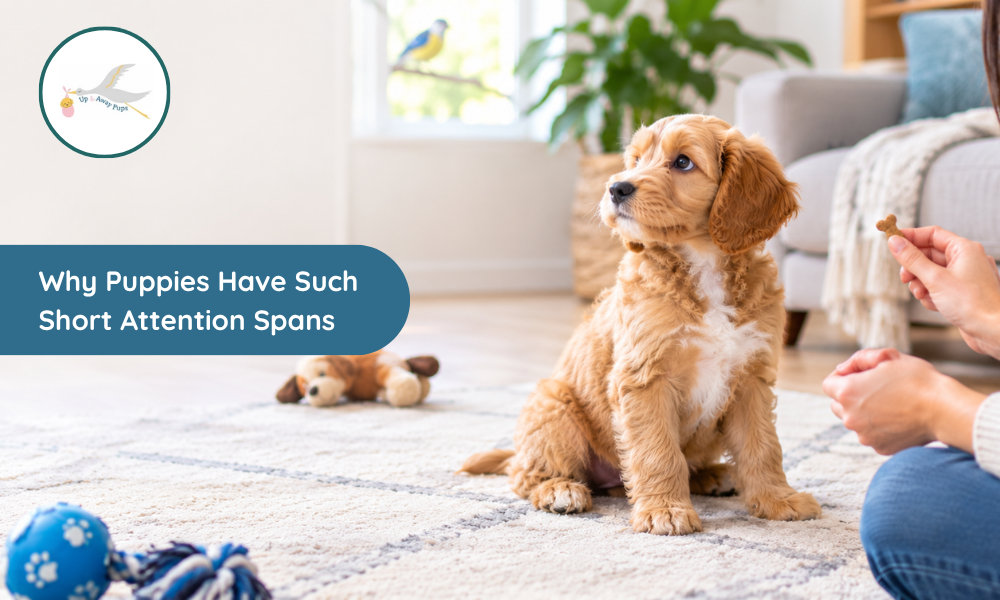
Why do puppies seem to lose focus so quickly? Their developing brains are constantly processing new sights, sounds, smells, and experiences. Discover what’s behind your puppy’s short attention span and how their focus develops over time.
Quick Answer
One moment your pup is locked onto a treat in your hand, tail going, ears up, and entirely dialed in. The moment next, a leaf drifts past the window and the treat, the training, and you no longer seem to exist. If you face this often as a pup owner, nothing is really broken. It’s just biology that’s doing exactly what it’s supposed to do at this age.
One of the most common things new puppy owners run into is their pups' short attention span. It hardly means what pup owners assume. A moment a pup follows your command perfectly, and the next they start chasing a shadow across the floor like the treat that never seemed to exist. This isn’t stubbornness. It's a training failure.
Such divided focus is often common across breeds of all sizes, whether it’s a bouncy working-line pup or a tiny Teacup Yorkshire Terrier who’s learning to sit for the first time. What really explains it is happening right within one’s brain. It's not about how well anyone is training. Knowing the timeline can make the process less frustrating.
What's Actually Happening in a Puppy's Brain
A pup's short attention span comes from biology, not just behavior. Also, a couple of areas of a pup’s brain remain active during these early months.
Impulse Control Circuitry
A pup’s prefrontal cortex often handles impulse control. In pups, it’s still building the connections that allow an older dog to pause before reacting to something exciting.
Attention Pathways
Long-term focus relies on neural pathways that strengthen with repetition. This suggests a pup's brain is still building the stamina to hold attention longer.
Working Memory Capacity
Remembering a command in mind while overlooking distractions often involves working memory. It’s a skill that develops gradually rather than arriving all at once.
So, expecting adult-level focus from a younger pup is a bit like expecting a toddler to sit through an entire lecture. The wiring for that kind of long-term attention isn’t finished yet, no matter how many treats are on offer.
Why Puppy Focus Slips So Fast
A couple of common factors can make an already short attention span even shorter in the moment. Each one adds its own layer to the science that works behind a pup’s focus.
🐾 The World Feels Louder to a Puppy
It’s common for pups to experience their new surroundings with a lot more intensity compared to other adult dogs. New sounds, smells, and sights consistently compete for attention. So a young brain hasn’t learned yet what’s actually worth ignoring.
What competes for attention:
- Unfamiliar sounds nearby
- New scents in the environment
- Sudden movement or activity
Adult dogs quickly learn to ignore the familiar background stimuli over time. However, a pup’s brain treats almost everything as equally worth investigating. So a puppy’s first visit to a dog park is one of those moments that hits hardest, with dozens of new sounds, smells, and dogs competing for attention.
🐾 Puppies Focus Even Less
When a pup is overtired, it behaves a lot like a fatigued toddler. Focus is generally the first thing to disappear once fatigue sets in.
Signs a pup is overtired:
- Increased clumsiness or stumbling
- Sudden bursts of erratic energy
- Ignoring cues it already knows
A short nap often fixes a pup’s wandering attention more reliably instead of pushing through another couple of minutes of training. You can reduce separation anxiety in puppies using this same calming instinct. This is because a pup who feels more settled and secure can filter out background stress more easily.
🐾 No Real Reward Means No Real Focus
Puppies are often like most learners. Focus works best when there’s a clear reason to. Without a strong incentive, attention shifts towards whatever appears interesting nearby.
What keeps a puppy engaged:
- High-value treats during training
- Short, varied training games
- Praise delivered right away
Consistently repeating the same low-reward activities can make a pup lose focus faster. Rotating through different activities keeps your pup happy and engaged. It adds mental stimulation and variety to training routines.
🐾 Age Changes Everything Over Time
Pups' attention spans aren't constant. They develop as their brains mature, improving month over month through the first couple of years of life. For instance, a bouncy Cavapoo or a tiny Teacup Chihuahua follows almost the same developmental timeline, although their daily energy may look very different.
A rough age-based guide:
- 2 to 3 months of age is the best, with a few minutes at most
- 4 to 6 months can be associated with gradually longer stretches
- 7 to 12 months is a perfect age for visibly enhanced focus
A clear idea of what pup owners can expect at each age takes a lot of the guesswork out of training and also sets real goals that help with a pup’s development. It’s not where the calendar mentions it should be.
🐾 Excitement Can Short-Circuit Focus Entirely
A pup who’s thrilled to find someone, another dog or even its own leash will lose all their focus on a command they knew perfectly seconds earlier. Major emotions often override training in that moment, no matter how well the lesson was going before the real excitement hit.
What tends to trigger this:
- A favorite person walking in
- Another dog appearing nearby
- The sight of a leash or toy
Waiting a couple of seconds for that initial excitement to settle before giving a command works much better than competing directly with emotion.
How Today's Short Focus Builds Tomorrow's Trainability
The scattered attention a puppy shows today isn't wasted time. Every short, successful training rep quietly lays down the same neural pathways that will eventually support much longer stretches of focus.
What consistent short sessions build over time:
- Stronger recall of basic commands
- Better recovery after distractions
- Longer stretches of calm focus
Puppies that get regular, low-pressure practice tend to reach longer attention spans sooner than puppies pushed through long sessions that end in frustration for everyone involved.
A Little Patience Goes a Long Way
A puppy's short attention span isn't something to fix so much as something to work through together. As the brain matures and experience builds up, that focus naturally lengthens. This is especially true when training stays short, consistent, and matched to wherever a puppy actually is right now, not where anyone wishes it already was.
Frequently Asked Questions
At what age do puppies start focusing better?
Most puppies show noticeable improvement in focus between four and six months, with continued gains through their first year or two.
How long should a puppy training session last?
Sessions of three to five minutes tend to work best for young puppies, with a few short sessions spread across the day.
Is a short attention span a sign something's wrong?
Not usually. It's a normal part of brain development, not a training failure, and it improves steadily with age.
Does breed affect how quickly a puppy's focus improves?
Breed can influence baseline energy and drive, but the general timeline for attention span maturing tends to follow age far more closely than breed.
What time of day is best for training a puppy?
Many puppies focus best shortly after waking from a nap or before a meal, when they're rested but still motivated by food rewards.