

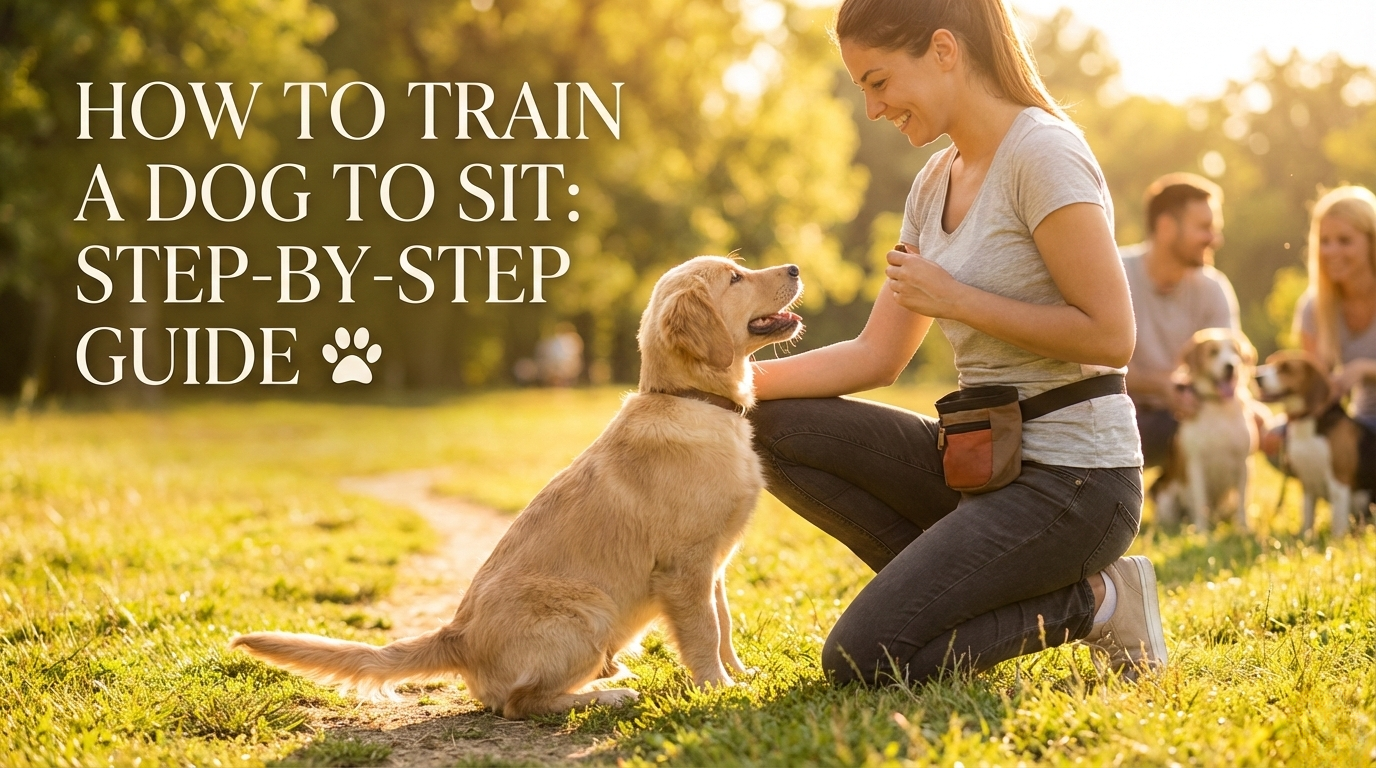
How to Train a Dog to Sit: Step-by-Step Guide
🐾 Table of Contents
- Why “Sit” Is the Most Important Command to Teach First
- Understanding How Dogs Learn Commands
- When Should You Start Teaching “Sit”?
- Preparing for Successful Training Sessions
- Step-by-Step Guide: How to Train a Dog to Sit
- Common Problems and How to Fix Them
- How to Make the Sit Command More Reliable
- Final Thoughts
Teaching a dog to sit is the first step in obedience training. The sit command forms the strong foundation for polite behavior, impulse control, and advanced training skills. A dog who sits reliably on cue is easier to manage, calm across daily situations, and is more responsive to the owner's commands.
In our post today, we are going to help you with your raised concern about "how to train a dog to sit." Irrespective of whether you are dealing with a highly energetic pup or a distracted adult dog, teaching the "sit" command helps to build obedience, enhance focus, and strengthen your bond.
Why “Sit” Is the Most Important Command to Teach First
The sit command plays an extensive role, where it places your dog in a stationary position. It builds mental focus, offers better self-control, and promotes focus. When your pup learn to sit, they start understanding how to pause, listen, and then respond instead of reacting impulsively. This is an effective command extremely useful during real-life situations like:
- Greeting visitors calmly
- Waiting before meals
- Pausing at doorways
- Managing excitement during walks
- Preventing jumping or lunging
A dependable sit command can turn teaching other behaviors like “stay,” “down,” and “heel” extremely seamless. Due to this strong foundation, sit is widely considered across pet parenting as one of the essential puppy commands for building structured communication and obedience.
Understanding How Dogs Learn Commands
Dogs start learning through association, rewards, and repetition. Dogs are often likely to repeat any consistent behavior that turns into a position. Transparent communication and prompt rewards can reduce puppy biting behavior. It teaches impulse control and appropriate responses, especially at the early stages of learning. The primary learning principles include:
- Timing: Rewards should be given immediately after the correct behavior.
- Consistency: The same tone, word, or hand signal should be used at all times.
-
Clarity: Dogs demand clear cues and achievable steps.
Small companion breeds, such as Teacup Teddy Bear pups, benefit from gentle pacing and simplified cues that build their confidence at early learning stages.
When Should You Start Teaching “Sit”?
- Puppies: Puppies start to learn the sit command as early as 7-8 weeks old. Training early is extremely beneficial for smart companion breeds like the Bichon Frise, which promptly respond to structured routines and positive reinforcement.
- Adult Dogs: Adult dogs, including the rescues, learn to set any age. Some breeds even learn faster due to longer attention spans and much better impulse control.
-
Senior Dogs: Senior dogs learn or relearn the sit command through training. But training should be structured keeping in mind their existing arthritis and joint issues. American Kennel Club (AKC) highlighted that senior dogs experience age-related joint stiffness, necessitating the importance of low-impact training with basic commands.
Preparing for Successful Training Sessions
Before you start, make sure that your dog is prepared. These basic aspects are the main puppy training tips for beginners to help new owners avoid confusion while building early positive habits.
Choose the Right Environment: Start in quiet areas with little to no distractions. Fenced yards or living rooms are the best.
Select High-Value Reward: Soft, pea-sized treats are the best. Always select something that your dog finds motivating, like:
- Small pieces of chicken
- Commercial training treats
- Cheese (used sparingly)
-
Keep Sessions Short
Always keep the training sessions 5-10 minutes only to prevent fatigue or frustration.

Ready to welcome a loving puppy into your home?
Explore Available PuppiesHand-raised • Healthy • Ready for loving homes
Step-by-Step Guide: How to Train a Dog to Sit
The best way to teach a dog to sit is to take it step by step, setting simple, manageable goals that can build understanding and confidence. All the stages below focus on timing, clarity, and reinforcement to achieve credible learning.
Step 1: Get Your Dog’s Attention
Your dog has to be mentally engaged and concentrated on you before any command is introduced. Getting attention means that your dog is able to see cues, rewards, and moves with focus and clarity without confusion and distraction. Do this in the following manner:
- Quiet environment
- Eye-level positioning
- Treat ready
- Calm posture
This action prepares for successful training by establishing a dedicated learning experience. Attentive dogs are more sensitive and are less likely to get lost in later steps.
Step 2: Use the Treat Lure
A treat lure helps your dog sit freely, without coercion. This technique involves movement of the head in a manner that is instinctive to promote good postures and allow the experience to be relaxed and free of stress. Apply the lure correctly:
- Treat near the nose
- Slow upward motion
- Slight backward angle
- Smooth movement
Luring is used to teach dogs what will earn rewards. Practicing this action again and again creates muscle memory that will enable the sit action to be natural and effortless instead of straining.
Step 3: Introduce the Verbal Command
However, the verbal command must be introduced when your dog starts to correlate the action with sitting. The word has to be timed in such a way that it coincides with the proper action. Use the command properly:
- Clear voice
- Single-word cue
- Calm tone
- Consistent wording
By associating the word sit with the action performed, the dogs will relate a language to the action. This will avoid confusion and aid quicker command recognition during training sessions.
Step 4: Reward Immediately
Short-term reinforcement is used to let your dog know that sitting is what they want to do. Late reinforcers may perplex dogs, which undermines the behavior-reward match. Reinforce effectively:
- Instant treat delivery
- Verbal praise
- Gentle petting
- Positive energy
The system of fast rewards reinforces learning by imprinting positive results. With immediate feedback, a dog will willingly and confidently revert the behavior more than once.
Step 5: Repeat and Build Consistency
Practicing turns learning into a strong habit, and it makes one move into a faithful habit. Regular training keeps dogs in check and makes them act in specific circumstances and settings appropriately. Also, be consistent by:
- Short sessions
- Daily practice
- Same cues
- Gradual progression
Successful attempts end the session, maintaining the levels of motivation. It builds reliability over time so that your dog will sit and not shake when commanded to do so, rather than being urged to do it every time.
Common Problems and How to Fix Them
The following issues justify the need to motivate dogs to sit on command, along with ways to achieve this goal through minor modifications.
Problem 1: Dog Jumps Instead of Sitting
Jumping is typically a result of excitement or rushed movement. According to behavior data from the American Kennel Club (AKC), jumping is often caused by over-arousal and a lack of impulse control, particularly when dogs expect rewards sooner than the cues are provided. Reduce the lure, decrease the movement, and reinforce quiet behavior to encourage sitting rather than reflexive responses.
Problem 2: Dog Backs Away During Training
Retreating is a characteristic of uncertainty or pressure. Slow down the pace of movement, play by a wall, and have loose body language to ensure your dog is comfortable and is involved.
Problem 3: Dog Refuses to Sit
Denial can imply perplexity, uneasiness, or demoralization. Introduce better cues and more valuable rewards, and reduce sessions as you ensure your dog is physically comfortable during training.
Problem 4: Dog Only Sits When Seeing Treats
Relying on observable rewards leads to dependence, not to diminishing rewards. Alone, to make a response to verbal commands, hide treats, vary reinforcement, and provide more praise.
Problem 5: Dog Gets Distracted Easily
Learning during early training is overwhelmed by distractions. Begin with surroundings of high silence, narrow down sessions, and slowly set in new surroundings to enhance concentration and reliability of wishes.
How to Make the Sit Command More Reliable
Reliability is built when the dog reacts to the sit command in varied circumstances and distractors and in diverse emotional conditions. This skill will have to be practiced, increased in difficulty, and reinforced in situations beyond simple training on treats. The reliability of the sit behavior is particularly crucial during Retractable Leash Training. Impulse control will prevent spontaneous pulling and unsafe movement.
Improve command reliability by focusing on:
- Practicing multiple daily situations
- Increasing distractions gradually
- Using consistent verbal cues
- Reinforcing calm compliance consistently
-
Rewarding effort, not perfection
Repeat training, practice, and exposure to challenges progressively and slowly, assist in transforming a sit as a training exercise into a reliable automatic response in real-life conditions.
Final Thoughts
Teaching a dog how to sit is not just a simple training session. It also develops communication, patience, and trust between the owner and the dog. Dogs are taught to behave in a calm, predictable manner through a series of mechanisms, consistency, and positive reinforcement. Training in practical scenarios and continuous practice will enhance compliance, minimize behavioral difficulties, and provide the basis of progressive training and future success.
Looking for a loving puppy to welcome home?
Explore More Puppies HereHand-raised • Healthy • Ready for loving homes