

Retractable Leash Training: How to Teach Your Puppy Safely
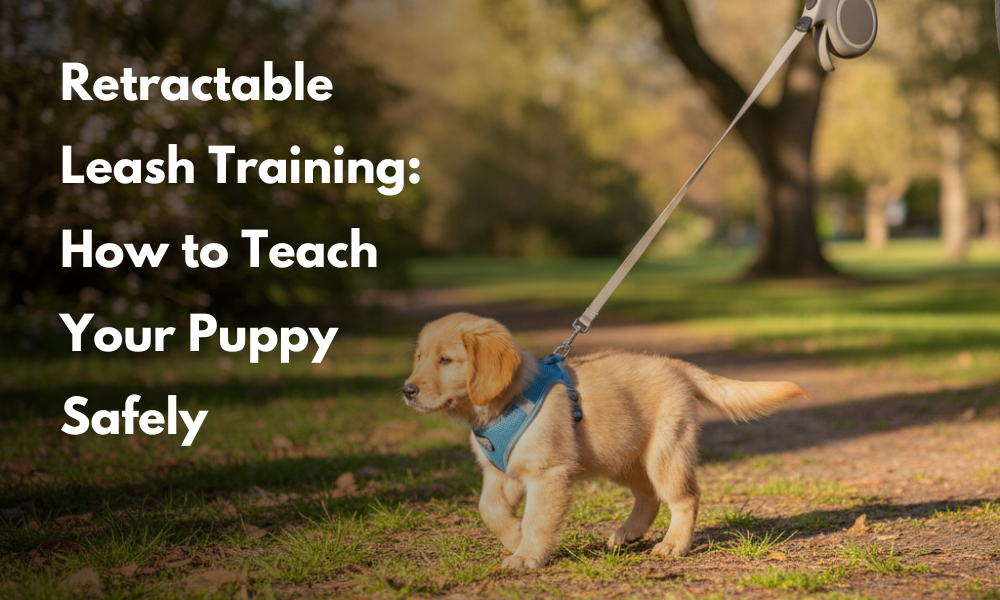
Retractable leashes are often debated in puppy training due to safety concerns and behavioral impact. When used correctly, at the right training stage, and with proper supervision, they can support controlled exploration and recall practice. This guide explains when retractable leashes are safe, when to avoid them, common mistakes owners make, and step-by-step tips to introduce them responsibly, helping puppies enjoy safer, calmer, and more confident walks with their owners.
🐾 Table of Contents
Retractable leashes are frequently the most debatable topic in the section on dog training. Few owners love the freedom they offer, while the trainers often warn about safety risks and bad habits. In reality, when a leash is used correctly, intentionally, and at the right training stage, a retractable leash becomes the most efficient tool for controlled exploration and recalling practices.
In our post today, we will guide you through the best way to introduce your pup to retractable leash training whenever it is right. We will also cover the instances when it is best avoided and ways to prevent the common mistakes that cause injuries to your pet. This helps your pup enjoy the stress-free walks together.
What Is a Retractable Leash?
A retractable leash is a small handled product that automatically winds and unwinds the leash line to allow walks to be customized, and to allow even a small dog breed like a Teacup Maltese to have some room to explore, and yet be on a leash. Most models include:

- A locking mechanism to stop extension
- A cord or flat tape (tape is generally safer)
- A handle grip for one-handed use
In comparison to the average 4-6 feet leashes, the retractable leashes have a range of 10-26 feet, which gives a puppy more freedom to move.
Are Retractable Leashes Safe for Puppies?
It is good to know about the dangers as well as the proper conditions to have a safe time before you clip one on. Puppies do not know the limits of a leash, and consequently, they should be trained attentively. Potential risks involve:
- Forceful Jerking Injuries: A puppy that is running to the end of the line could get a sudden strain in his neck, particularly when he is only wearing a collar without a support harness.
- Thin Cord Burns or Cuts: The thin rope may be twisted around the legs or fingers; it will burn frictionally and may even be torn open when your puppy pulls unexpectedly. The American Veterinary Medical Association (AVMA) notes that leash injuries remind owners that they need to be careful with their equipment and that they should train their pets to remain on the leash.
- Loss of Control in Busy Areas: Long line length implies that your pup can get to people, other dogs, bicycles, or traffic at any time before you can respond, and this will lead to unforeseen circumstances.
-
Encouragement of Pulling Habits: Unequal leash length may serve to provide the puppies with the wrong idea that pulling would result in more freedom rather than a rewarding, calming walking habit.
When They Can Be Safe to Use
• For Puppies With Basic Leash Manners: Less anxious puppies who have already learned how to walk transition to a more relaxed and longer-line freedom and controlled roaming loosely.
- During Structured Outdoor Practice Sessions: Calm settings enable you to combine puppy training tips for beginners with knowledge in the real world and ensure that distractors are kept at a manageable level and that training objectives are achievable.
- With a Secure Harness and Reliable Recall: The harness looks very nice and fits around the neck of your puppy, but the commands of recall are strong and give you control of distance when necessary.
-
With Fully Engaged Owners Paying Attention: Using retractable leashes is safest when you are attentive, look around, play with the lock, and lead your puppy actively.
Step-by-Step: How to Teach Your Puppy to Use a Retractable Leash Safely
The atmosphere of training should never be negative, unforeseen, or stressful. A gradual plan is the way to make your puppy learn slowly but surely.

Start With Basic Leash Skills First
You should be sure your puppy has mastered the basics of walking before you teach him to walk with a longer leash. This base will make it easier and less stressful for the two of you, especially when traveling safely with your puppy in new settings. After you have a calm and responsive puppy on a regular leash, you are in a position to start with an endless expansion of freedom gradually and with patience:
- Practice on a standard 4–6 foot leash
- Reward calm walking beside you
- Build focus with frequent check-ins
Choose the Right Equipment
Safety begins with good gear. Strong tape-style retractable leash is safer than the thin cord types as it minimizes risks of injury. The American Veterinary Medical Association (AVMA) states that preventable injuries on the leash of both dogs and their owners are still reported in veterinary records, which demonstrates the relevance of using safe and well-designed equipment. Always use equipment in the weight, strength, and growing level of your particular puppy in order to be able to have full handling control without stress or discomfort:
- Select a weight-appropriate retractable leash
- Use a supportive, comfortable harness
- Avoid fragile cord-style leashes
Begin Training in Quiet, Open Areas
Begin by inviting venues like the yard, lonely areas in the park, or broad walkways. These settings minimize distractions and enable your puppy to focus on you, whether you are training a playful Cavalier King Charles Spaniel or another breed. Extend the leash slowly and punish calmness. Use a supportive voice and a look of repose to allow you to relate to being away with feeling safe instead of over-stimulated or terrified when teaching your puppy new things:
- Begin with short controlled walks
- Extend the leash gradually over time
- Reward calm, responsive behavior
Teach Clear Stop and Recall Commands
Present stop, wait, and come prior to full extension. Reward your puppy over and over again until your puppy answers every time, even when there are slight distractions. Any successful reaction must be rewarded instantly so that your puppy realizes that it is always worth checking in. This is one of the main elements of teaching puppy commands in a constructively positive manner. These types of commands turn into automatic protection tools, which you may count upon in every walk or in some unforeseen circumstance:
- Practice reliable recall frequently
- Reward immediate returning behavior
- Reinforce pause or stop cues
Lock the Leash Before Hazards Appear
Always reduce and tighten the leash in time before you get to the roads, people, or other dogs. By so doing, there would not be such unexpected jumps or dangerous surprises. Be a defensive driver, project ahead, and expect trouble to occur. This active management approach is effective, as you prepare your home for puppy safety, but changes a possible threat into a seamless and easy sailing every time your puppy is taken on a walk:
- Shorten the leash near busy areas
- Anticipate movement and distractions
- Keep the puppy safely within reach
Stay Mentally Present During Walks
Leashes with retractable leashes need awareness. Do not leave your phone with the leash at all, or leave it dangling the entire length. Instead, be sensitive and exposed to the body language and the surroundings of your puppy. The American Kennel Club (AKC) confirms that the majority of accidents related to a leash occur when the owner is not entirely focused. Such an involvement constructs better communication, averts accidents, and makes each walk a secure learning event instead of a fortuitous journey fraught with useless risks:
- Watch your surroundings carefully
- Adjust leash length proactively
- Maintain engaged, attentive handling
When NOT to Use a Retractable Leash
When one cannot control the dog, avoid using retractable leashes. Some of our environments or behaviors only need a lot more order and intimacy.
- Busy Streets or Traffic Areas: Cars, bikes, and high-paced environments demand the utmost control, and thus retractable leashes are unsafe and uncontrollable.
- Crowded Public Spaces: Long leash distance could potentially lead to accidental tripping, unwelcome greetings, or unsafe interactions with strangers or other dogs.
- With Reactive or Fearful Dogs: Lunging, barking, and panic dogs do better with more structured, shorter leashes instead of being left to roam freely.
- During Early Puppy Training: When new puppies are taught the fundamentals of walking on a leash before being allowed to walk off on a longer leash, consistency in the length of the leash is necessary.
-
When You’re Distracted or Multitasking: Leashes that are put away should be handled. You can no longer keep an eye on them, so a regular leash will be safer for everyone.
Common Mistakes Owners Make While Retractable Leash Training
Retractable leashes are useful gadgets, although they are associated with tangible danger when applied in real-life without organization or consideration.

- Allowing Sudden High-Impact Pulling: Rushing puppies to the end of the road can cause impulsive force, injuring their neck or making their owners unstable in the process of walking.
- Using Thin Cord Leashes That Cause Burns or Tangles: Thin rope strips may be tightly tied around legs, paws, or fingers until painful friction burns or cuts occur when they start to stretch. The American Veterinary Medical Association (AVMA) brings up awareness on leash related injuries in order to promote safer handling practices.
- Losing Control in Busy or High-Traffic Areas: The length of the leash allows your puppy to access traffic, strangers, or other dogs that they may be unfamiliar with, before you can intervene or lock the leash safely.
- Accidentally Reinforcing Pulling Behavior: Puppies might be taught that tug-of-war calls forth increased distance, which, acting inadvertently, strengthens behaviors that add challenges in future leash training programs that are difficult to reverse.
-
Dropping the Handle or Experiencing Mechanical Failure: Should the handle slip or roll, the bang and the motion will cause your puppy to jump and panic or even run away, particularly with nervous dogs.
Final Thoughts: Safe Freedom Is the Goal
Retractable leashes may be a handy product, especially when they can be used intelligently. They provide freedom to puppies to explore, even though the bond with humans remains strong. But alertness, forbearance, and carrying yourself respectfully are required as well.
Start with the basics. Select the appropriate environment. Stay alert. Reward generously. And be careful before convenience.
You are not only taking your puppy out with the right approach. Teaching them how to make their way in the world, and that is to do that with confidence, you are giving them one of the best presents you can.