

Step-by-Step Puppy Training Tips for Beginners
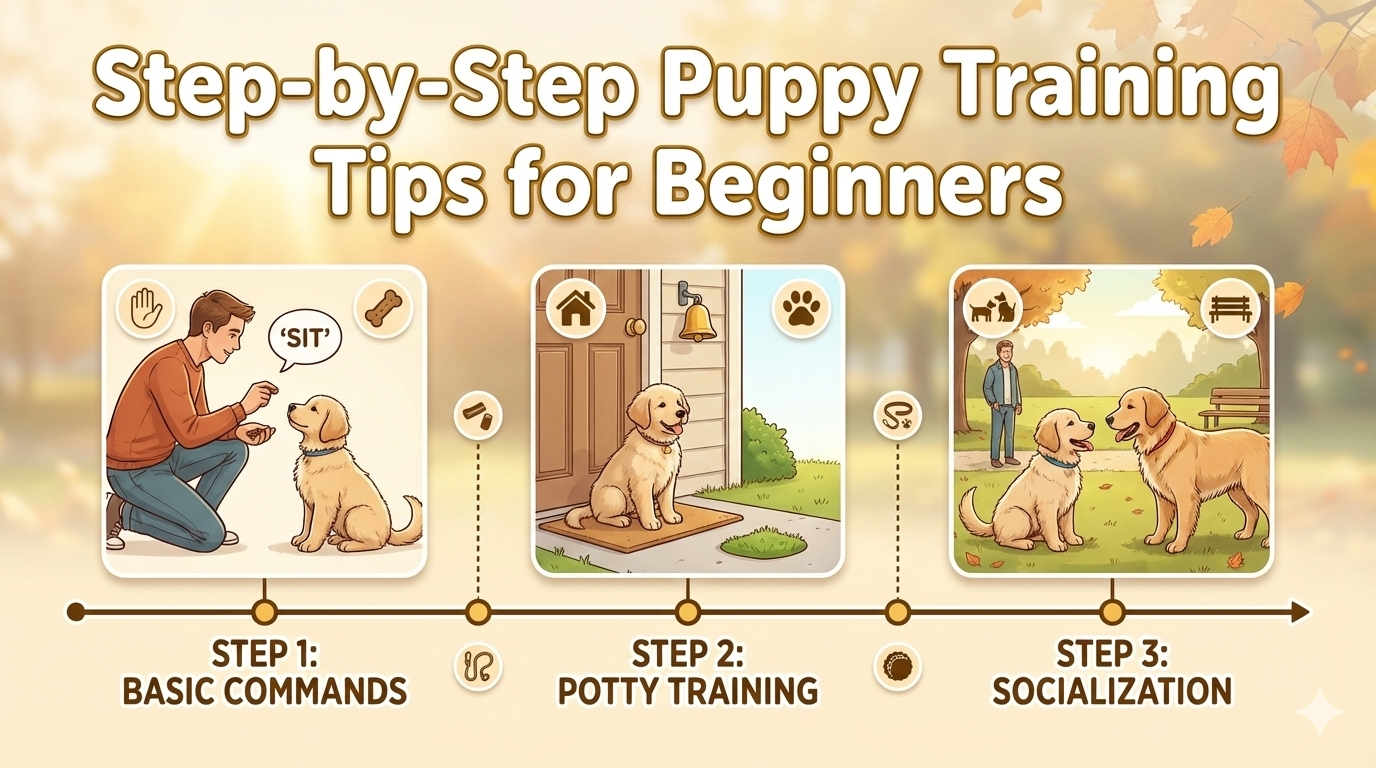
This guide helps beginners train puppies with patience, consistency, and positive guidance. It explains how routines, bonding, and understanding puppy behavior build trust and confidence during early development. The article covers essential supplies, step-by-step training methods, gentle commands, socialization, leash skills, and mental enrichment. It also includes a simple daily training schedule and highlights common mistakes to avoid. By focusing on calm repetition, clear communication, and emotional safety, new owners can raise a well-behaved, secure, and happy puppy from day one.
Adding a puppy to the home builds excitement, besides the other vital responsibilities. Training defines their early behavior, establishes their confidence and trust, especially during the vital development stages. Clear direction helps beginners in avoiding common frustrations, besides setting down some healthy boundaries.
Key Takeaways
- Puppies learn best through patience and repetition
- Short, positive sessions work better than long drills
- Routine reduces anxiety and confusion
- Positive reinforcement builds lifelong trust
Puppy training tips for beginners emphasizes patience, consistency, and understanding the way their pups are going to learn the best. Structured guidance develops the pups emotionally, encouraging positive habits and helping pups feel safe, secure, and confident, while adapting to daily routines.
Understanding Your Puppy’s Behavior
Curiosity and repetition are the two ways through which every puppy learns. A calm routine helps shape that curiosity into lifelong positive habits. Below are the key behaviour insights that make training easier.
Puppies play, explore, then rest. Short, gentle training sessions work far better than pressure or raised voices.
Small dogs like a cockapoo puppy tire faster and need lower-intensity activity compared to high-energy working breeds.
Daily schedules for meals, walks, and naps help your puppy feel secure and reduce confusion or anxiety.
Tail movement, yawning, and lip licking show emotions long before barking. Understanding these signals improves training success.
Puppy Training Essentials: What You Need Before You Start
A calm and organised home helps your puppy settle faster—especially during the first 90 days. Preparing the right essentials supports training that feels effective, gentle, and stress-free.
- ✔ Small, soft training treats
- ✔ Clicker (optional)
- ✔ Crate or playpen
- ✔ Leash & collar or harness
- ✔ Puppy pads (if needed)
- ✔ Chew toys
Creating a quiet training corner improves focus and helps distractions fade, allowing your puppy to learn calmly during short, positive sessions.
Stepwise Puppy Training Tips for Beginners
A loving relationship precedes obedience. Sit down on the floor, talk low, and punish curiosity. A small teacup maltese, as well as a big mix breed, learns better when they are trusting first. Training should be brief and fun. Give soft hands only when invited.
It is only then that real progress will be achieved when your puppy is comfortable being close to you. Being there with love forms the strong bond that forms the basis of all the subsequent orders you will ever give.
Structure guides learning. Eat, walk, sleep, and take a train at a consistent hour of the day. As per the information provided by the Centers for Disease Control and Prevention (CDC), responsible pet care promotes healthier communities. A routine day is beneficial to puppies to relax and minimize indoor accidents.
Routine activities allow families to organize training. Consistency eliminates the problem of confusion and promotes gradual improvement without stress and high tones.
The training process starts with simple manners like sit, stay, come, and look. Minor rewards and hints of compliments support success. Make sessions short and good. Punishment should be avoided, as fear retards learning.
This strategy promotes leash training for first-time owners who might be nervous. Hone the skill in a quiet environment, then put in extra distractions. Being patient and repetitive are keys to your puppy achieving success and creating wonderful confidence in their daily lives.
Puppies explore with their mouths, which sometimes leads to nipping. Replace fingers with toys, reward calm play, and redirect gently when teeth appear. To stop puppy biting, the goal is to teach appropriate interactions without scolding.
Calm voices and clear boundaries encourage soft behavior. Persistent biting often improves when exercise, mental games, and soothing rest routines are balanced throughout the day.
Confidence is strengthened with safe and gradual exposure to people, environments, and sounds. Carry snacks and also reward inquisitiveness without coercing. As per information highlighted by the World Health Organization (WHO), emotional wellbeing can be supported by strong human-animal bonds.
Relaxed socialization during controlled situations will show your puppy that the world is friendly and predictable, and that will cause fear and reactive behavior to diminish as it grows to adulthood.
Light leash training begins at home and then goes to the field when attention has been gained. Pulling When pulling, reward walking beside you. Do not pull and do not lecture since respect is important.
The same patient approach even allows Training Older Dogs that did not know how to behave on a leash before. The walks taken daily enrich the mind and improve movement to avoid boredom. The trust builds up when your puppy learns what to expect when you are out on easy walks.
Training is successful when play balances practice. Puzzle feeders, smell games, and mild tugging activities stimulate the mind and body of your puppy. Brief sessions do not cause fatigue and frustration. Play develops your relationship and minimizes undesirable habits due to boredom.
Complimentary relaxation and regular sleep will contribute to healthy development and will enhance concentration during organized training. A cheerful dog studies voluntarily and anticipates every moment of your company.
Training Schedule for Puppies
| Time of Day | Focus |
|---|---|
| Morning | Break, eat, little training, play. Continue with restful sleep so that learning is settled without excessive stimulation and anxiety intruding into the day. |
| Midday | Little walk, toilet training, two or three little training games, and another nap. Regularity facilitates cheerier conduct and reduces misfortunes within the house. |
| Evening | Playing quietly, cuddles, last potty, and bedtime in a small and cozy sleeping area that is safe and predictable. |
Mistakes Beginners Make (And How to Avoid Them)
All people begin somewhere, and wrong steps are nothing but learning opportunities. Serene contemplation will make you adapt fast and proceed amicably. The common newcomer errors include:
All people begin somewhere, and wrong steps are nothing but learning opportunities. Serene contemplation will make you adapt fast and proceed amicably. The common newcomer errors include:
Puppies are confused by different commands for the same behavior. Select a single word and apply it throughout the lesson to make it understandable and repeatable daily.
Cruel techniques hurt the trust and stall the progress. Positive reinforcement is more efficient and creates a loving relationship that is lifelong and happy.
This makes schedules unpredictable, thus leading to anxiety. Frequent feeding, bathroom breaks, and playtime will train your puppy on the schedule of what to expect and when to enjoy a peaceful rest.
Conclusion
Raising a puppy is a process that is based on patience, understanding, and dedication. Light-hearted directions lead to the formation of bold followers who believe in guidance instead of making errors. Minimal effort in daily affairs defines long-term behavior and emotional security.
Training enhances communication and strengthens connections by virtue of understanding each other. The growth occurs through regularity and not perfection. With help, sympathy, and expectations, initial difficulties become lifelong achievements that give satisfaction.