

Common Dog Phobias and Fears: Causes, Signs, and Solutions
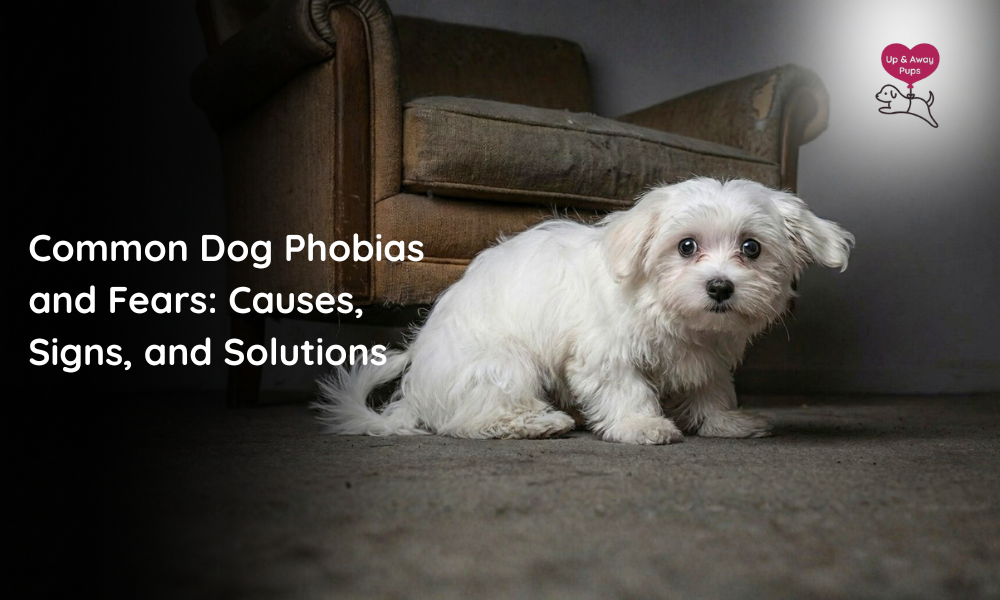
Fear is a biological survival mechanism, but phobias can cripple a dog's ability to learn and thrive. We dive into the physiological signs of distress and explain why punishment never works, offering instead structured solutions for long-term behavioral health.
🐾 Table of Contents
- What’s the Difference Between Fear and Phobia in Dogs?
- The Most Common Dog Phobias With Real Causes
- How Fear Manifests: Behavioral and Physical Signs
- How Dog Phobias Form
- Evidence-Based Solutions for Managing Dog Phobias
- What Makes Fear Worse (Common Mistakes)
- When to Seek Professional Help
- Conclusion
When a dog panics when left alone or cowers during a storm, it does not mean that they are acting dramatically or stubbornly. It is because they are experiencing a heightened fear that transforms a pup's behavior and well-being. When fear turns intense, irritating, or persistent, it transforms into a phobia.
This is a typical nature that is shaped through genetics, early experiences, and environment, turning dog phobias into a huge impact on health, learning, and daily life. Knowing about the root causes, signs, and solutions for dog phobias is the very first step every owner should take to build emotional safety.
What’s the Difference Between Fear and Phobia in Dogs?
Fear and phobia are terms that are often used synonymously; however, they are very different in how dogs respond to them. This is significant as it will help to understand whether the problem is severe or not, and what consequences it has.
Fear is a normal protective reaction that can make dogs feel threatened. It manifests in special circumstances, disappears when the stimulus is removed, enabling the dog to resume a composed, functioning level of behavior without permanent emotional effects.
A phobia is the unreasonable fear that stays even after the danger has been eliminated. It evokes automatic panic reactions, overloads the nervous system, and disrupts the process of learning, recovering, and daily functioning.
Why the Difference Matters
Through experience and reassurance, normal fear can be overcome. Phobias should be structured, as constant exposure in the absence of support upholds avoidance routes and increases emotional torture in the long run.
The Most Common Dog Phobias With Real Causes
The development of dog phobia is influenced by genetic factors, initial exposure, learning history, and environmental factors. Although the stimulus can change, the emotional reaction lies in the processing of danger and the protection of the brain of a dog. The most common dog phobias are listed below, along with the manner in which they develop and the reasons why.
Noise Phobias (Thunder, Fireworks, Sudden Sounds)
The most severe and increasing fear of dogs is noise phobia. Unpredictable, abrupt sounds bombard the nervous system, leading to panic reactions that tend to intensify with repeated exposure and age.
What it looks like
- Trembling or shaking
- Hiding or bolting
- Destructive attempts at escaping
- Excessive panting
-
Loss of bladder control
Why it develops
- Hearing of the utmost sensitivity
- Sudden unpredictability
- Shakings and alterations of pressure
-
Past traumatic exposure
Fear memory pathways become stronger with each incident of panic, such that noise phobia may not improve with time and more often than not may just get worse due to not being treated.
Separation Anxiety (Isolation Distress)
Separation anxiety is an anxiety disorder of panic due to the isolation of attachment figures. It is not motivated by disobedience but by emotional distress and may have a serious effect on the mental and physical health of a dog.
What it looks like
- Vocalizing after departure
- Exit-focused destruction
- Excessive drooling
- Self-injury behaviors
- House soiling
Why it develops
- Hyper-attachment patterns
- Early abandonment experiences
- Lack of independent learning
-
Unpredictable routines
Separation anxiety is a reflection of being unable to self-soothe, not intractable, and needs to be structurally modified to avoid punishment or enforced isolation.
Social Phobias (People, Dogs, Children)
Social phobias occur when dogs feel threatened by strangers or other animals. Smaller companion breeds such as the teacup shih tzu may develop social phobias more easily if early interactions are overwhelming or poorly structured.
What it looks like
- Freezing or retreating
- Growling or snapping
- Lunging behaviors
- Avoidance signals
- Overreactive responses
Why it develops
- Poor early socialization
- Traumatic interactions
- Genetic sensitivity
- Learned fear responses
Fear-based aggression is most often an effort to achieve distance rather than to establish dominance, and it is aggravated by failing to heed warning signals or by punishing them.
Veterinary and Handling Phobias
The so-called phobias of contact with vets and being touched are obtained with constant association with restraint, pain, and novel location. Dogs are inclined to associate fear with smells, things, and actions, which leads to acute stress development.
What it looks like
- Refusal to enter clinics
- Shaking or screaming
- Freezing or shutdown
- Handling aggression
- Escape attempts
Why it develops
- Painful procedures
- Forced restraint
- Lack of positive recovery
- Sensory overload
Repetitive stressful contact does not lead to desensitization of dogs, but sensitization and thus reduction of fear proactively is a pivotal welfare and safety issue in the long-term.
Environmental and Situational Phobias
Environmental phobias are a fear of some location, surface, or circumstances. A smaller size with a greater degree of sensitivity also predisposes breeds such as the teacup chihuahua to environmental phobias, and in particular loud noises, new surfaces, or new space changes.
What it looks like
- Refusing movement
- Avoiding specific areas
- Sudden freezing
- Heightened vigilance
- Stress vocalization
Why it develops
- Single traumatic event
- Poor early exposure
- Sensory processing issues
- Environmental unpredictability
These fears may be highly precise but so ingrained, and they must be approached in a gradual and reframing way instead of being coerced.
How Fear Manifests: Behavioral and Physical Signs
Fear affects the entire mechanism of a dog's behavior, physiology, and ability of the dog to be able to learn. The external manifestations should be recognized, but internal signs of stressful responses should be identified so that early intervention can be done.
Behavioral Signs
Behavioral fear reaction includes the attempts of a dog to escape, avoid, or cope with threatening stimuli, and it usually intensifies when it does not see warnings not to run away:
- Avoidance or hiding
- Freezing behavior
- Hypervigilance
- Defensive aggression
- Destructive escape attempts
- Vocal distress
Physiological Signs
Fear has an immediate physiological effect, and this occurs unconsciously, and is a sign of nervous system overload; not a willed act:
- Elevated heart rate
- Dilated pupils
- Stress hormone release
- Digestive upset
- Excessive salivation
- Immune suppression
How Dog Phobias Form
Dog phobias are associated with the overriding of learning routes in the brain by the fear center of the brain on a number of occasions. Once the fear memories have been highly encoded, the dog will automatically react whenever intense attention is given to survival responses, with the reasoning or training cues being forgotten. The conditioning, in the case of fear, occurs in the following ways:
- Amygdala hyperactivation
- Emotional memory encoding
- Stress hormone reinforcement
- Inhibited learning pathways
Following evidence-based puppy training tips for beginners, such as gradual exposure and positive reinforcement, can significantly reduce the likelihood of fear developing into long-term phobias.
Evidence-Based Solutions for Managing Dog Phobias
Proper management of dog phobias aims to minimize emotional distress and lead to behavioral change. Evidence-based practices support gradual learning and neurological recovery, prioritizing safety over punishment or forced exposure.
Trigger Identification and Management
The first step in fear management is identifying triggers and avoiding the repetition of panic. Reducing unnecessary stress helps shield the nervous system from stress and avoid the subsequent development of fear. Organized strategy entails:
- Trigger journaling
- Environmental adjustments
- Predictable routines
- Stress load reduction
Inconsistent handling practices, including improper retractable leash training, can increase uncertainty during walks and unintentionally expose dogs to fear triggers before they are emotionally prepared.
Creating Safe Recovery Spaces
Safe spaces offer the dogs some sense of control when they are scared. Such settings arouse less, do not escalate, and will not reinforce avoidance or dependence. Safe spaces that are effective are:
- Quiet location
- Familiar bedding
- Sound buffering
- Voluntary access
Emerging from the dogs as ready to retreat rather than panicking, the emotional recovery is quicker and more reliable.
Systematic Desensitization
Desensitization involves diminishing fear by gradually exposing the dogs to intensities of the triggers that cause panic, allowing the gradual neurologic adaptation resulting in a gradual weakening of the nervous system. Effective desensitization needs:
- Below-threshold exposure
- Gradual progression
- Short sessions
- Consistent repetition
The development should be patient; it is illogical to expose someone to new experiences too quickly, as it destroys the sense of emotional security and education.
Counterconditioning Emotional Responses
Counterconditioning alters the dog's attitudes towards a trigger by associating it with something good so that they learn to treat it with calm anticipation instead of tolerance. This process involves:
- High-value rewards
- Precise timing
- Emotional focus
- Repetition consistency
Emotions change, and behavior comes automatically without coercion or repression.
Teaching Emotional Regulation Skills
Dogs with enhanced self-regulation handle stress better. Instruction in peaceful behaviors enhances resilience and reduces anxiety at baseline, regardless of the environment. The following help regulation tools are:
- Mat relaxation
- Predictable cues
- Choice-based training
- Impulse control
Following structured tips to socialize miniature or teacup puppy safely, such as controlled exposure, choice-based interaction, and calm environments, helps prevent early fear conditioning.
Increasing Mental and Physical Enrichment
Enrichment reduces anxiety because it satisfies a dog's cognitive and physical needs, which can lead to surplus energy and fear-stimulating behaviors. It is enriched on the basis of:
- Daily exercise
- Puzzle feeding
- Scent work
- Training games
A satisfied dog is more able to process stress, and it can also get over stress more quickly than another.
What Makes Fear Worse (Common Mistakes)
Human behavior commonly instills fear in dogs, suppresses their sense of control, and escalates stress levels. According to the American Veterinary Society of Animal Behavior (AVSAB), punishment and forced exposure do not solve anxiety disorders but increase fear and violence. The most prevalent errors that may make the fear worse are:
- Punishing fear signals
- Forced exposure flooding
- Ignoring warning signs
- Inconsistent daily routines
- Delayed intervention
- Mislabeling fear as dominance
Repeated mismanagement of fear leads to a learning process in dogs, in which they come to believe threats are inescapable and result in emotional shutdown, heightened reactivity, and eventual chronic worsening of behavior.
When to Seek Professional Help
The dog needs the help of a professional when the dread rises far beyond his or her powers to handle it or go about the business normally. The American Animal Hospital Association (AAHA) claims that behavioral disorders that have not been addressed are significant welfare problems, which require clinical as well as behavioral treatment. The medical assistance should be obtained on the following occasions when you observe:
- Aggression driven by fear
- Panic-induced self-injury
- Escalating fear responses
- Daily routine disruption
- Multiple unrelated fears
- Training regression
Early professional intervention also prevents the formation of fears, promotes emotional stability, and makes it more probable that future behavioral recovery will be achieved.
Conclusion
Fear of dogs is not an aspect of behavioral weakness but an emotional response based on biological and learned experience. With science-based methods, proper management, and early detection, fearful dogs can be assisted, and they learn to be fearless and regain their emotional balance. Fear is repelled with humane treatment that leads to greater trust, better living conditions, and allows them to live a safer and more secure existence in the world.