

Why Does My Puppy Whine in the Crate at Night? How to Stop It
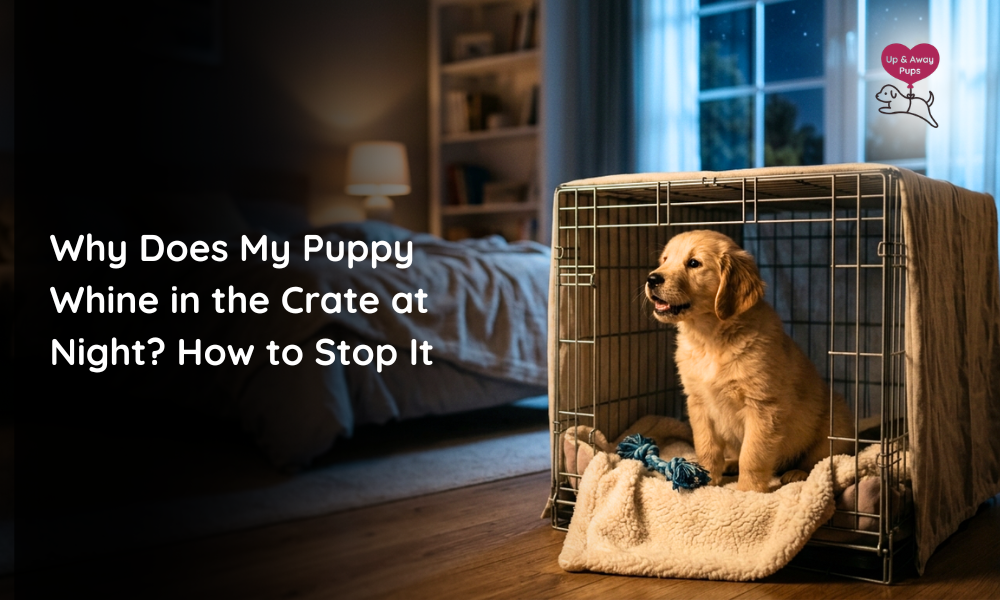
Puppy whining in the crate at night is common for new pet parents. Learn what causes it and discover practical crate-training tips to help your puppy relax and sleep peacefully.
🐾 Table of Contents
A peaceful night at home can be easily transformed into an anxious one when a puppy begins whining inside the crate. This stage is experienced by many new owners of pets, and they are concerned that something might have gone wrong. The majority of them are just normal puppy behavior and adjustment difficulties.
When young dogs are brought to a new home, they abandon their mother, genetic mates, and environments they know well. The whining in the middle of the night is also a signal of misunderstanding, panic, or lack of necessity instead of obstinacy. The problem is typically addressed through close monitoring and training of the patient.
It can be easier to deal with once a brief introduction to the nature of puppy sleep and emotional adaptation is made. Small breeds like the Cavalier King Charles Spaniel, which are owned by individuals, are likely to observe such behavior in the initial few nights.
Puppy Sleep and Adjustment Basics
During the initial weeks in a new home, puppies do not easily adjust to a new lifestyle. Night sounds, darkness, and separation are unknown and can activate vocalization.
Some of the early adjustment factors tend to affect behavior at night:
- New home stress
- Separation discomfort
- Developing bladder control
- Changing sleep schedule
Minor behavioral changes at this phase have the ability to significantly enhance nighttime when in the crates. Early awareness: It will enable owners to react freely rather than support whining by accident.
Signs Your Puppy Is Communicating a Need
Whining does not necessarily imply that a puppy hates the cage. It serves as a communication form many times. Training errors can be avoided by learning the distinction between emotional distress and mere needs.
Puppies often leave clear signs when they are uncomfortable or confused. Here are what the owners should keep a watch for:
- Restless crate movement
- Pawing at the door
- Sudden high-pitched whining
- Repeated waking cycles
It is through observation that one can tell whether the puppy needs reassurance, needs toileting, or maybe needs more controlled training in the crate. This is common across small dog breeds, like Teacup Shih Tzu owners, who realize during the initial phases of crate training.
Tiny Size, Big Love – Meet Teacup Shih Tzus 🐾
Looking for a small, affectionate companion? Teacup Shih Tzus are perfect for cozy homes and loving families. Discover adorable pups raised with care and ready to fill your life with joy.
Explore Teacup Shih Tzu PuppiesCommon Reasons Puppies Vocalize in the Crate at Night
Whining at night tends to be linked to specific about-to-happen behavioral predictors. Knowing the reasoning behind it will enable owners to react in the proper way rather than emotionally.
Separation Anxiety in a New Environment
New puppies usually have a difficult time when their mother and littermates are gone. Even the silence of the night may amplify a sense of isolation and provoke a response of whining, driven by the desire for comfort.
This change of emotions is frequently expressed in the following ways:
- Seeking human presence
- Continuous whining sounds
- Scratching crate door
- Refusing to settle
Bedtime routines and gradual independence training aim to build the puppies' confidence. Monotonic reassurance that does not focus on them greatly makes them understand that night separation is safe and not permanent.
Need for a Late-Night Bathroom Break
Puppies at a young age do not have much control of their bladder and they may wake up in the night with the need to urinate. Whining is their only way to alert others that they are not okay at times.
Watch for physical cues like:
- Circling in a crate
- Sudden restless movement
- Short urgent whines
- Standing repeatedly
Potty routines in the evening help to minimize the accidents during the night. Scheduling of bathrooms before going to sleep allows puppies to sleep longer without any trouble or fear.
Excess Energy Before Bedtime
Pups are always high-energy throughout the day. Lack of activity in the evening leaves the restless after the pups are placed inside the crate.
Whining related to energy may be manifested in the following ways:
- Chewing crate bars
- Spinning repeatedly
- Barking briefly
- Refusing to lie down
Formal recreation and brain drainage in the evening preceding rest are a way of letting puppies have surplus energy. A puppy who is not tired goes to sleep better and rests better during the night.
Crate Training Still Feels Unfamiliar
A crate symbolizes a new area that should be learned by puppies gradually. The absence of positive relations may render the environment strict or disorienting.
The discomfort with the crate may include:
- Hesitating entering crate
- Whining immediately inside
- Constant shifting position
- Ignoring bedding area
Positive reinforcement training helps change the crate into a safe place to rest. Promises of treats and toys and silent compliments form positive reactions, making resistance less likely.
Hunger or Thirst Discomfort
Nighttime behavior is occasionally influenced by feeding periods. Mildly hungry or thirsty puppies can show expression of their unease by whining after bedtime.
Possible signs include:
- Licking crate floor
- Searching food area
- Short whining bursts
- Increased alertness
Evening feeding times are better at promoting sleep. Metabolize heavy meals too late and provide puppies with as much food as possible in the earlier evening.
Environmental Noises or Light Changes
Human noises heard late at night, which humans are hardly aware of, could be scary to a puppy. Whining is occasionally triggered by street sounds, movement around the house, or changing lights.
Such triggers as environmental triggers may involve:
- Sudden outside noises
- Passing vehicles sounds
- Room light changes
- Household movement
Relaxation can be enhanced by placing the crate in a quiet, dark place. Regular noise levels at night allow the puppies to feel safe and are less sensitive to strange noises at night, which in some cases cause the first signs of common dog phobias in the sensitive puppies.
Learned Attention-Seeking Behavior
Puppies quickly acquire patterns of human reactions. The whining has to be quickly followed by an action that will, unknowingly, explain to them that talking aloud involves communication.
Attention-seeking whining usually contains:
- Short repeated cries
- Pauses between whining
- Watching the owner closely
- Stopping after attention
Equal responses help avoid reinforcement. Careful observation, just making sure the basic needs are fulfilled and avoiding protracted contact, is what teaches the puppies to settle.
Conclusion
Whining in the night crates might be overwhelming in the initial few weeks of having a puppy, but patience and persistence have a way of improving the circumstance. As they get accustomed to new routines and boundaries, as well as to new sleeping habits, puppies use vocalization to communicate.
A relaxing attitude, a consistent bedtime routine, and gradual, considerate crate training slowly foster trust and safety. When the crate is introduced as a nightly routine, most puppies learn to be comfortable in their crates. Improvement will not occur in one day, though minor changes are noticeable soon, as long as owners are thinking rather than acting only out of emotion. Light training will assist in today's production of a well-adjusted canine who will lie down on the floor at night well into the future.