

Understanding Whale Eye in Dogs: Signs, Meaning, and Why It Matters
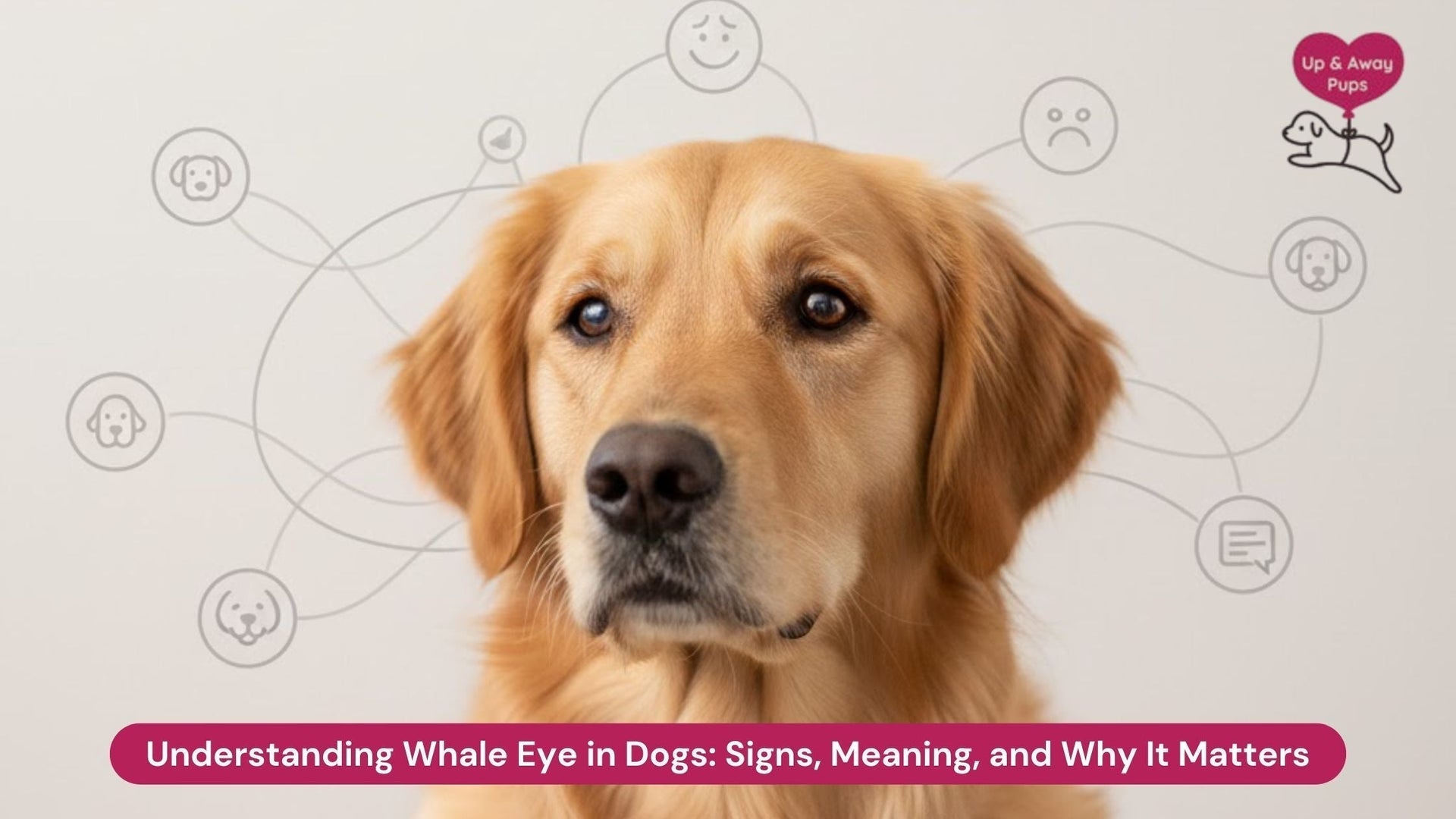
Whale eye—the visible white of a dog's eye—is a critical, often overlooked signal of canine stress. Learn how to identify this subtle warning, distinguish it from normal movement, and respond effectively to prevent escalation and keep your dog safe.
🐾 Table of Contents
Dogs depend a lot on body language to communicate their emotional conditions. Besides barking or growling, which are their natural instincts, numerous essential cues are often far more hidden and overlooked. "Whale eye" is one of those indications. Identifying what eye can help pet parents, trainers, and caregivers to evaluate canine stress levels, preventing possible dangerous situations from arising.
In our post today, we are going to highlight every detail surrounding our topic on whale eye in dogs, including how to identify it and ways to respond to eradicate this condition.
What Is Whale Eye in Dogs?
Whale eye, at times, is referred to as half-moon eye. This condition happens when a dog is turning their head away while keeping their eye affixed on an animal, person, or object. This reaction causes the white part of their eye or the sclera to turn visibly white. In small dog breeds like a Teacup Pomeranian, whale eye can be noticed due to their prominent eye shape and elevated levels of sensitivity to close handling.
For relaxed pups, a small portion of the sclera is visible. When a noticeable arc or crescent of white appears, especially during head turning or when they stiffen their body, it typically indicates emotional discomfort rather than a natural movement.
Whale Eye vs. Normal Eye Visibility
Whale eye and normal eye movement should be differentiated. Accidentally, dogs during play, excitement, or rapid head motion will show only the whites of the eyes. In flat-faced breeds, such as the French Bulldog, natural eye formation may reveal a more scleral eye, and thus context plays a crucial role in decoding stress in these situations. The dog's body language in such instances is loose and relaxed.
Whale eye, as a result of stress, is normally coupled with:
- A stiff or rigid posture
- Closed or tightly held mouth
- Ears pinned back or held low
- Lip licking, yawning, or avoidance behaviors
Pet owners can interpret it based on the general context and their pup's body language.
How to Recognize Whale Eye in Dogs
It is important to note that whale eye can only be recognized by paying attention to the minor details in a face, body strain, and context. Observe general tendencies and not one-time phenomena:
Visible Eye White
When a white part of the eye appears prominent as the dog turns its head without losing visual control of a threat or an unpleasant scenario on the side or toward people, the whale eye becomes most recognizable.
Head and Eye Position
Whale eye is generally seen when a dog turns its head away and keeps its eyes fixed, forming lateral gaze. This indicates avoidance, with an increase in alertness rather than a relaxed engagement.
Facial and Body Tension
Whale eye is rarely isolated but often accompanies strains of the face and body, along with tightening of the mouth muscles, a frozen body position, and loss of natural movement. This could be a result of persistent physical tension combined with whale eye, and should thus not be neglected as an underlying concern for canine mental health.
Duration and Repetition
Whale eye can be short, and repeated or extended exposure to whale white. It is primarily so when an interaction strongly implies persistent discomfort n,ot some temporary or accidental expression on the face that may be produced by ordinary movement or excitement.
What Should You Do If You See Whale Eye?
One of the obvious signals of discomfort is whale eye and should never be overlooked. It is best to respond positively to avoid escalation and ensure the dog's trust in humans.
Give the Dog Space Immediately
The significant reaction of the whale eye is growing distance. Take a step back; never reach or lean over the dog. Leave it to sort things out, but never give the sense that they are enticed, pressured, or cornered into defending their space with escalation.
Stop the Current Interaction
When you are petting, grooming, embracing, or touching the dog, stop immediately. The ongoing interaction may increase stress levels and make the dog develop beyond subtle warnings to growling, snapping, and even other defensive actions.
Avoid Punishment or Scolding
Avoid punishing your dog for showing whale eye. Correcting the warning triggers will suppress communication instead of addressing discomfort. This makes future reactions unpredictable, increasing the likelihood of sudden, unanticipated defensive responses when situations become stressful.
Reduce Environmental Stressors
Recognize and eliminate stressors such as noise, congestion, intrusive touching, or playing with food and toys. Stress-related behaviors, such as causes of dog trancing, could be minimized by lowering environmental pressure and overstimulation.
Allow an Escape Option
Ensure that your pup has a clear path to leave the current situation. Make another room, crate, or quiet space accessible. This gives your pup control over their situations, which is the key to reducing anxiety and restoring their emotional balance during stressful interactions.
When to Seek Professional Help
Repeated whale eye is not normal stress. Never confuse frequent whale eye with normal stress. As the American Veterinary Medical Association (AVMA) highlighted, the early warning signs of stress, such as whale eye, are paramount in preventing the escalation of fear behavior in dogs.
You should consult professional help when you observe:
- Whale eye appears often
- Stress escalates quickly
- Growling or snapping occurs
- Fear of familiar people
-
No improvement over time
Timely assistance from a skilled professional can prevent the causes of the problem, improve stress tolerance, reduce escalation, and enhance safety, confidence, and communication for both dogs and owners.
Conclusion
The whale eye is an essential element of a dog's body language that can be very helpful in understanding the dog's mood. It is not much, but a definite message is that a dog is uncomfortable or threatened.
Learning to identify and admire a whale's eye will allow dog owners to avoid tension, improve their relationship with their dog, and keep them all safer. Knowing these silent cues is part and parcel of caring for dogs responsibly.