

Why Your Dog Only Misbehaves When Guests Arrive?
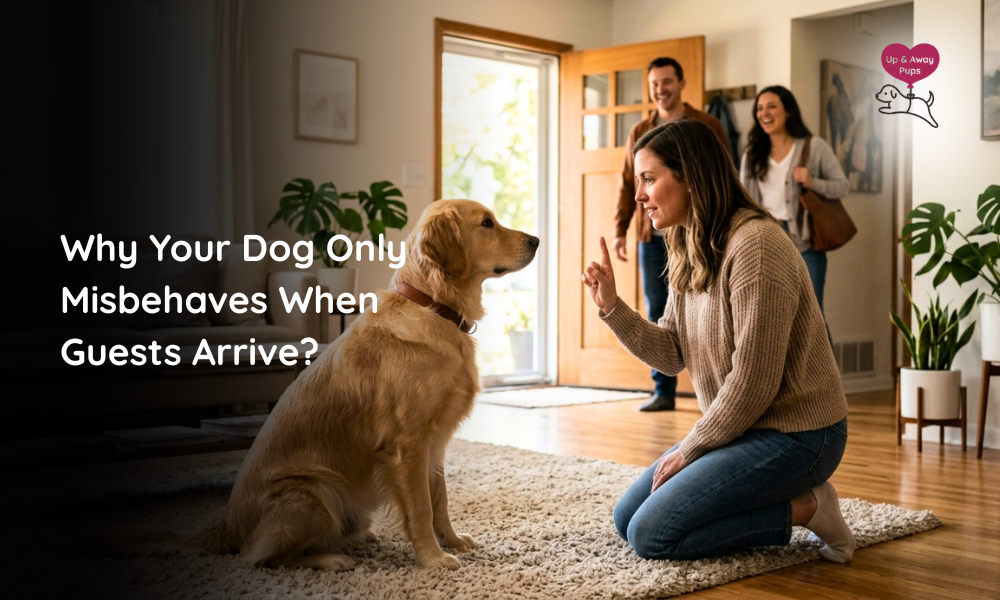
Does your dog suddenly start barking, jumping, or running around when guests arrive? Discover the reasons behind this common behavior and learn simple ways to encourage calmer greetings.
🐾 Table of Contents
Many dog owners notice a strange pattern. Their dog behaves calmly throughout the day but suddenly becomes loud, excited, or difficult to control the moment guests arrive. Jumping, barking, running around the house, or ignoring commands can make visits stressful for both owners and visitors. While this behavior may feel embarrassing, it is actually very common and usually has clear reasons behind it.
Why your dog reacts this way is the first step toward improving the situation
1. Excitement and Overstimulation
For many dogs, guests are extremely exciting. New people bring different smells, voices, movements, and attention into the home. Dogs are naturally curious and social animals, so this sudden change can easily stimulate them.
What appears to be misbehavior, such as jumping or barking, is often just your dog expressing excitement. Some dogs also associate guests with positive experiences like treats, playtime, or extra affection. Because of this, their excitement can quickly become difficult to control.
2. Limited Socialization
Dogs that were not exposed to many visitors during their early development may feel unsure when unfamiliar people enter their home. Instead of remaining calm, they may bark excessively, hide, or behave hyperactively.
When a dog rarely sees guests, every visit can feel like a big and unusual event. Over time, this anticipation can cause strong reactions whenever someone knocks on the door or rings the bell.
3. Territorial Instincts
Dogs naturally view their home as their territory. When someone new enters this space, they may feel the need to alert their owner or observe the situation closely. This can lead to barking, pacing near the door, or staying close to the visitor.
Even friendly dogs may react this way at first. They are not always trying to be aggressive. Instead, they are responding to their instinct to protect and monitor their environment.
4. Learned Behavior
Sometimes dogs repeat these actions because they have unknowingly been rewarded for them. For example, if a dog jumps on guests and receives attention, laughter, or petting, the dog may see that reaction as a positive outcome.
Dogs learn quickly from repeated patterns. If every guest arrival leads to attention, even negative attention, the dog may continue the behavior because it brings results.
5. Too Much Energy
Dogs with extra energy often react more strongly to excitement. If your dog has not had enough exercise or mental stimulation during the day, the arrival of guests can trigger a burst of activity.
This energy may appear as jumping, running through the house, barking, or constantly seeking attention. Regular walks, play sessions, and enrichment activities can help reduce this type of reaction.
6. Desire for Attention
Some dogs misbehave when guests arrive because they worry about losing their owner's attention. When the focus shifts to visitors, the dog may bark, nudge people, or act out to bring attention back to themselves.
In these situations, the behavior is not really about the guests. It is about the dog trying to stay involved and connected with their owner.
How to Encourage Better Behavior
The good news is that these behaviors can improve with consistent training and preparation.
Start by giving your dog exercise before guests arrive. A walk or play session can release extra energy and help your dog stay calmer.
Practice calm greetings by teaching your dog to sit or stay when someone enters the home. Reward calm behavior with treats and praise.
Ask guests to ignore jumping or barking until your dog settles down. This prevents the dog from learning that excitement leads to attention.
You can also create a comfortable resting spot such as a dog bed where your dog can relax while guests enter and get settled.
Gradually exposing your dog to visitors in calm situations can also help them become more comfortable with new people over time.
Final Thoughts
When dogs misbehave during visits, it rarely means they are being intentionally disobedient. Most of the time the behavior comes from excitement, natural instincts, anxiety, or learned habits.
With patience, consistent training, and positive reinforcement, your dog can learn calmer ways to greet visitors. Over time, guest visits can become a pleasant experience for both your dog and everyone who enters your home.