

Puppy Obedience Classes: What Puppies Learn and When Should They Start?
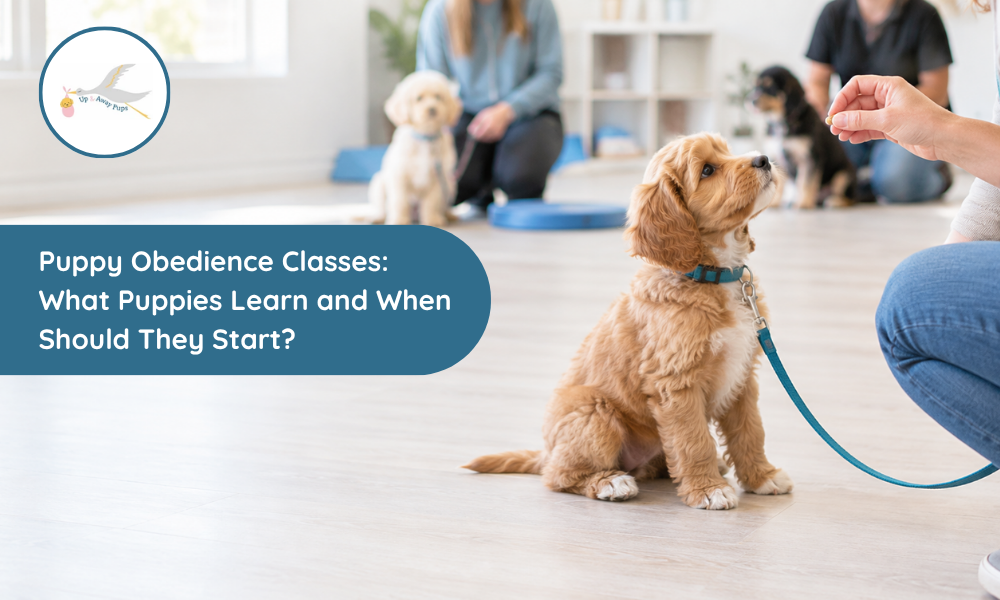
Starting puppy obedience classes too late can cost your pup its easiest learning window. Here's when puppies are actually ready, what they learn session by session, and how to know your dog is set up to start strong.
Quick Answer
Beginning puppy obedience classes too soon can be just as damaging as not doing it at all. Puppies learn names, sit, stay, loose-leash walking, and calm within weeks alongside essential social skills developed with other puppies.
Puppy training often gets pushed down the list by new owners, who assume a young puppy is too little actually to learn anything. The opposite is true: a puppy is most likely to be open to new people, sounds, and experiences in its first few months of life. Delaying too long may mean missing that early window when the lesson sticks with the least effort. Several questions come to mind right away:
- Is my puppy really old enough for classes?
- What will they learn during the first few weeks?
- Should I wait until all vaccines are completed before signing up?
Many puppies are ready sooner than you might think. A good class will be built around where they are developmentally, not an arbitrary age cutoff. This applies to any puppy, especially a small breed like a Cavapoo puppy, because the timing and basics don't differ much.
How a Puppy's Learning Window Actually Works
From day one, puppies aren't starting with a blank slate, but the speed at which they take on new stuff changes quickly over the next few months. Here’s approximately how that stretch breaks down:
- From birth to three weeks, sleep and instinctive nursing
- Between 3 and 12 weeks, the primary window when curiosity outweighs fear
- From the age of 8 to 16 weeks, a brief fear phase can occur
- The socialization period commences to shrink after 14 weeks
This is why the old advice to wait until a puppy’s vaccine series is complete often backfires. By four months, a significant portion of the early sociability window has passed, and small, food-driven breeds like a Teacup Yorkie Poo often benefit most from starting early.
Before assuming that a pup isn’t picking things up, it’s worth ruling out normal puppy clumsiness. Plenty of puppies just need a few more weeks before real focus kicks in as they mature.
What Puppies Actually Learn in Obedience Class
Although none of this happens overnight, a good class builds up these skills in layers, session by session.

🐾 Learning Their Own Name
One of the first things that a puppy must learn is that their name is meaningful. This bond forms in early sessions and builds the foundation for later skills.
What puppies practice
- Being attentive to their name and making it an automatic response to their name
- In distracting environments, eye contact is getting more and more rewarding
- In-house training to easily practice the “Watch Me” cue
A puppy who is on cue to check in is halfway on to impeccable leash manners and more relaxed strolls. Young puppies tend to have short attention spans, so sessions are short, very positive, and attention continues to grow rather than waning.
🐾 Sit, Down, and First Cues
These are the obedience cues most people think of when they think of obedience class, and when a puppy is involved, they learn them quickly. The trainer doesn't force the puppy into a position. Instead, a hand target or food leads the way.
What puppies practice
- Lure the dog into down and sit with rewards or targets
- Gradually increase sessions over time as these visits are brief and successful
- Provide each cue in slightly distracting settings
It takes more repetition to train the dog to sit nicely in a group than it does at home. This is because your puppy needs to learn to ignore the new sights and sounds. This concrete normally does not fail when set in concrete form.
🐾 Walking Nicely on a Leash
No one expects a ten-week-old puppy to walk in a perfect heel, but the class introduces the basics long before pulling becomes a habit. Using rewards rather than leash corrections, puppies practice moving calmly next to their person.
What puppies practice
- A loose leash receives a reward, not a tight one
- It is advisable to perform brief exercise walks indoors to begin
- Engaging in uncomplicated activities that make walking a rewarding activity
These early walking games matter more than people expect, since a puppy that likes to stay with you usually doesn’t need correcting later on. It also significantly reduces stress for everyone involved when you encounter real distractions on future walks.
🐾 Softening That Puppy Bite
Puppy teeth are sharp, and nipping is completely normal at this age. It can feel alarming to a new owner, though. Class can redirect the instinct to dominate so it doesn’t disappear entirely.
What puppies practice
- Redirecting noisy play to appropriate toys
- Being aware of overstimulation before it starts nipping
- Teaching a soft mouth through structured play
In most cases, puppies develop proper bite inhibition as they grow older, and puppy class often speeds up the process. Moreover, owners learn simple redirection techniques that stay useful long after puppyhood.
🐾 Greeting People Calmly
New owners often complain about jumping up, spinning around, and overall over-exuberance during their first class. In group settings, puppies get repeated, low-pressure chances to practice calm hellos with new people.
What puppies practice
- Rewarding four paws on the ground during greetings
- Teaching puppies to meet new people and puppies appropriately
- Encouraging group calm settling behavior
When a puppy jumps at random times at home and you correct them, it won’t help because it is a random behavior by your dog. Within a few weeks, owners actually see a real difference.
🐾 Waiting and Staying Patient
This skill connects all the other lessons, and it is usually the last piece to click into place. Puppies learn to wait momentarily before dashing off to get a food bowl, a toy, a doorway, a person, etc.
What puppies practice
- Teaches your dog to be patient with food or toys
- Patience before meals, doors, and greetings
- As the puppy gets better, distractions improve
Much of this groundwork pairs naturally with other early practices, such as becoming comfortable in a crate or calmly settling alone at home. The patience learnt here will carry into just about every area of a pet dog’s life.
These questions can help you understand exactly what you're paying for and prevent registration problems later.
Signs It's Time to Sign Up for a Class
A puppy doesn't necessarily need to be ready in any special sense, since a few practical checks are usually enough to get going.
- They received at least one set of vaccinations about a week before the first class
- They are eating, playing, and being themselves, showing no signs of illness
- They have been home a few weeks now and are starting to get settled
If you have checked off all of the boxes, there is hardly a good reason to wait.
What to Do Before Your First Class
Here’s what helps a first class go smoothly instead of overwhelming.
- Check timing of vaccination and deworming with vet beforehand
- Bring little treats your puppy already loves that are of high value
- To make food rewards effective, keep your puppy a little hungry
- Bring water, and plan for a few breaks because a young pup’s attention span is short.
- Expect distraction and slow progress in week one, and that’s normal
While none of this means your first time will be perfect, it does mean you can both enjoy it.

Every Great Dog Started With Puppy Class
All puppies will learn how to sit quietly and ignore a distraction in their very first class. Progress usually looks haphazard, slow, and full of wiggly distractions in these early weeks. This advancement is precisely what you ought to expect. The key is to start within the window when learning is easier and consistency is easier to maintain, and let that do the rest.
Frequently Asked Questions
Is 8 weeks a sufficient age for obedience class?
Yes. Most veterinary behavior groups now recommend starting around 7 to 8 weeks after the initial vaccine and dewormer, not waiting for the full series.
Will my puppy actually learn anything at that age?
The puppy will not master cues overnight, but short, repeated, reward-based sessions will build habits that are much easier to maintain than starting months later.
Do I need to wait until all vaccine classes finish?
No. According to most current guidance, starting after one set of vaccines plus about a week is ideal, since the socialization window closes well before full vaccine completion.
What should I do if my puppy is too shy or distracted?
It is quite common in the first one or two sessions. A good trainer adjusts pace and distance rather than forcing a nervous puppy.
How long is a typical puppy training class?
Most introductory classes run for four to six weeks, once a week. You will do short practice at home between classes.