

How Mother Dogs Care for Their Puppies (Complete Guide)
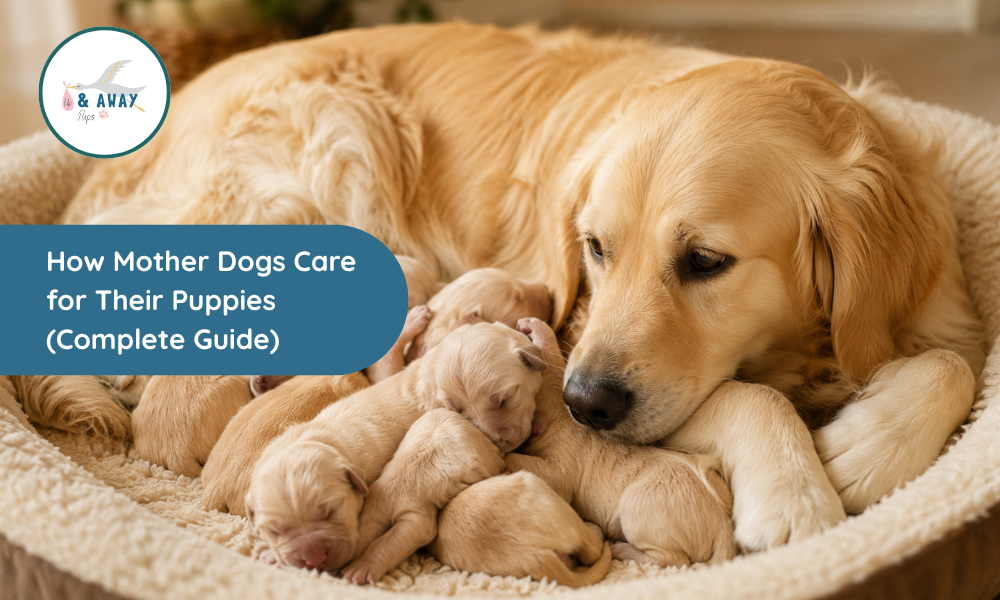
Mother dogs play a vital role in nurturing, protecting, and teaching their puppies from the moment they are born. Through feeding, grooming, warmth, and constant care, mother dogs help puppies grow healthy, secure, and socially confident during their earliest stages of life. This guide explores how mother dogs comfort their puppies, encourage early development, protect them from danger, and gradually prepare them for independence through natural instincts and bonding behaviors.
Nothing may share this feeling better than a mother dog and her pups, and it is really strong and powerful. Since the first breath of life comes in the womb, the mother becomes a loving, protective, early life teacher, nearly half asleep, but it is very real to their task to live.
This instinct is present in small breeds, too, such as a Teacup Pomeranian, and the mother is equally devoted, warm, and attentive to the pups. These early care times regarding the health and behavior of your puppy, as well as its emotional stability, will have an impact on its life.
The First Instincts of Birth: Mother Nature Takes Over
Immediately, the dog-mother starts her “care” taking spruce up. Her puppies must survive: Warmth, cleanliness, and breathing.
She will:
- Cleanse the puppies by licking one at a time of the birth fluids
- Encourage the circulation and ventilation of air
- In case the umbilical cord is not untied, chew on it
- Push them against the puppies, while they are still warm, to warm the young ones
Early care like this will be very significant. Newborn puppies are unable to regulate their body temperature on their own or may not always be able to breathe on their own.
Feeding and Nutrition: First Superfood Milk.
Every newborn puppy needs the milk of the mother in its first few weeks of life to be alive and survive, as well as be disease-resistant and to grow and develop well.
Mother dogs secrete colostrum only within the first 48 hours after giving birth. This special milk contains antibodies that will strengthen the puppy's immune system.
During nursing, she:
- Initially, for a few weeks, every 1-3 hours
- Forks on her side to exploit the teats
- Comes around and makes sure that every pup is fed
- Gives out milk depending on the size of the litter and the requirement
It only makes sense that, with breeds like Teacup Shih Tzus, smaller females may be exploited in their mothering and can be seen as expressing their maternal instinct.
Keeping Puppies Clean and Stimulated
The mother dog also plays a role in the hygiene, and to arouse the puppies since they cannot defecate or urinate in their own area. This maintains their bodies clean and arouses them.
Puppies' first few weeks are a time when they are unable to defecate or urinate without their mother helping them. They are stimulated by the mother by licking their abdomen and genitals.
Unusual behavior at this period should be observed by the owners. At this point, anomalies in both the mother and the puppies will be most evident and will be used to identify whether or not grooming and stimulation are abnormal.
It's a natural reaction and important to live outside the home.
Protection: A Natural Guardian Instinct
Once they give birth, mother dogs have a protective instinct towards their pups. She cushions them against the many risks and distractions within the environment.
She will:
- To guard against predation of the nest
- Spend most of the time with her pups
- Show dangerous behavior (growling, barking, or preventing entry)
- Whenever she is disturbed, relocate the puppies to their comfort zones
A good-natured dog can even be timid or guarding during this stage.

Find The Perfect
Puppy For Your Family
Explore happy, healthy puppies raised with love and care, ready to bring joy, comfort, and companionship into your home.
View Available PuppiesTemperature Control and Comfort
Heat is essential to the survival of the baby animals. The mother dog is naturally charged with the role of providing heat through constant physical contact and placing the litter.
She helps by:
- On all fours, lying in a curled position on the litter
- Position in relation to temperature
- Regular visits to the nest
This “living incubator” function is crucial, particularly during the first two weeks.
Early Teaching and Social Development
As puppies grow, gradually losing their dependency on the caregiver and becoming dependent on the teacher, they also start to discipline, shape their knowledge about other dogs in the litter, and become socially aware.
She may:
- Gently bite to put bad behavior in check.
- Do not bother to attend to them when they are too needy to be attended to.
- Promote self-sufficiency through the reduction of the feeding schedules.
- Familiarize some of the simple social stimuli with the litter.
Being aware of how to choose the right breed is relevant to individuals who plan to have a puppy permanently. Such maternal interaction and the temperament of the puppy might vary according to the breed.
Such early training influences the way the puppies will relate to human beings and other animals in the future.
Gradual Weaning: Preparing for Independence
Weaning is a natural process that entails animals phasing out of total dependence upon their mothers to a partly independent diet and behavior.
Wearing Mother dogs wean automatically (4 to 8 weeks).
This includes:
- Reducing nursing sessions
- Encouraging the use of solid food
- Providing more time to puppies alone
- Allow puppies to play themselves
An appropriate day-to-day schedule can keep your dog happy and healthy. This will guarantee a good transition and reduce stress to the mother and puppy.
When Human Help Becomes Necessary
Even though mother dogs may be very capable, human assistance might be required when:
- A puppy is rejected or ignored by the mother
- The mother is very anxious or aggressive
- Milk yield is below target.
- Puppies are weak or not gaining weight
- Mother seems unwell or fatigued
If this occurs, veterinary advice is crucial!
Final Thoughts
The mother dog's care is a combination of biological, instinctual, and emotional attachment. In a few weeks, she forms the foundation of the life of her puppy, nurturing, comforting, helping them keep their diet, keeping them safe, and training them.
Any pet owner will find this an interesting process and may be reminded by this how strong natural caregiving can be in the context of animal care.
Frequently Asked Questions
Frequently Asked Questions
What is the duration of stay of the mother who gives birth to the puppies?
It is normal to have puppies part with their mother after a period of eight weeks, but this has to be done gradually.
Will a dog mother abandon one of her pups?
Yes, and it does happen that a weak or sick puppy might be neglected when he or she cannot nurse themselves or survive.
When do puppies start recognizing their mother?
Puppies also acquire the smell and sound of their mother within the initial couple of days of birth.